


Troubleshooting electronics is one of those skills you don’t really learn from textbooks—it comes from things going wrong at the worst possible time.
 View
View
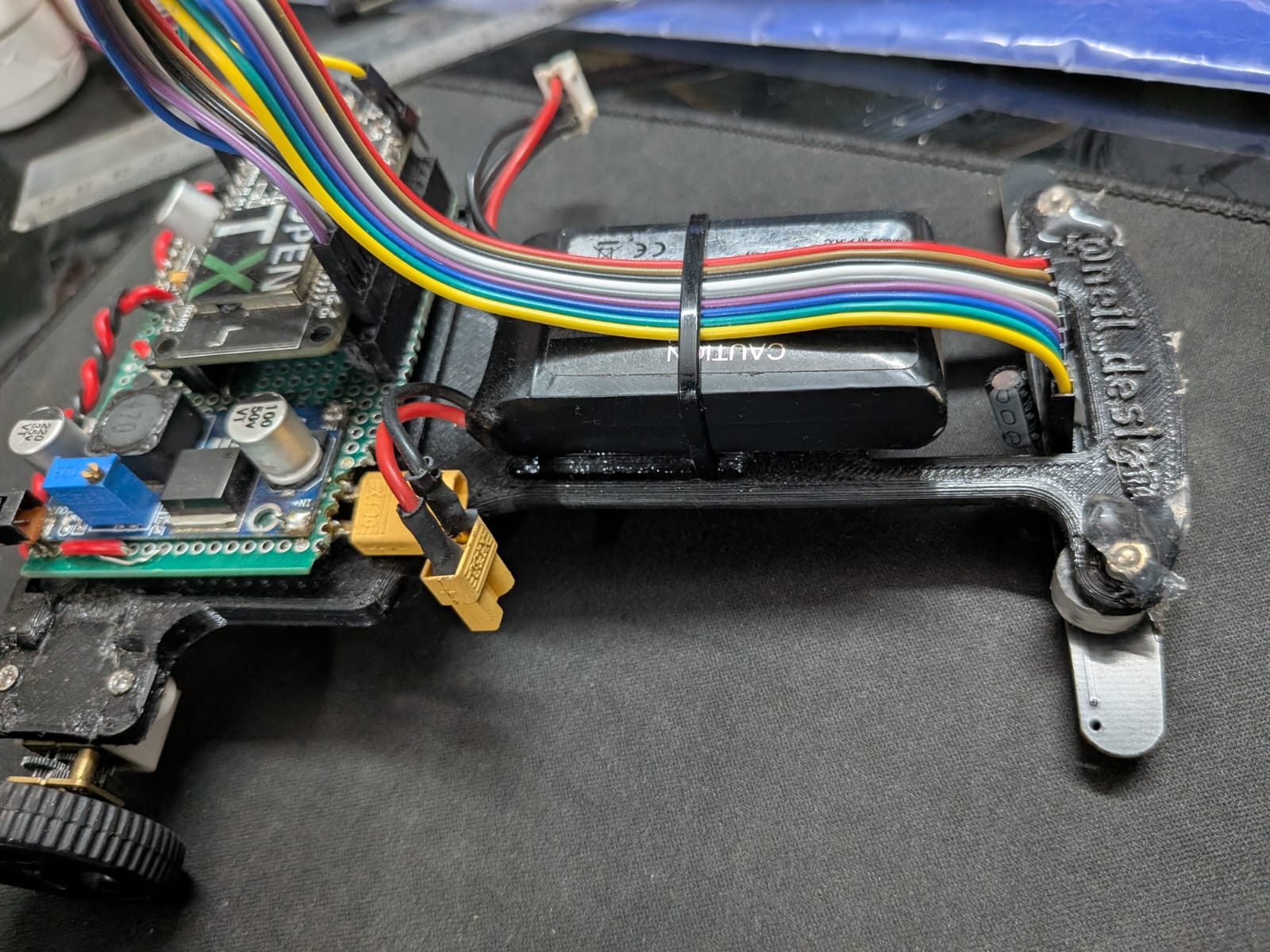
I experienced this firsthand during a line follower robot (LFR) competition where I secured 4th place. My bot was built around an ESP32, paired with a Robojunkies 7A sensor array and a DRV motor driver. On paper, everything was solid: tuned PID, calibrated sensors, and decent mechanical stability. But during the run, the robot started wobbling aggressively, especially on straights where it should have been stable.
Initially, I assumed it was a tuning issue. I spent hours tweaking PID constants—kp, ki, kd—trying to dampen the oscillations. I also adjusted speed profiles and re-ran calibrations multiple times. Nothing worked consistently.
That’s when I shifted approach from “tuning” to systematic troubleshooting.
First, I revisited all electrical connections—checked solder joints, continuity, and grounding. Then I used serial prints to monitor live sensor values. At a glance, everything seemed normal, but I noticed occasional spikes in the middle sensor readings.
To isolate the issue, I tested each sensor individually. That’s when the anomaly became clear—one sensor was producing unstable values intermittently. After closer inspection, I found that a small ceramic capacitor near the middle sensor was the culprit. It was likely introducing noise or affecting signal stability due to its placement and condition.
Replacing that capacitor immediately stabilized the readings. Once the input became clean, the PID behaved exactly as expected, and the wobbling disappeared.
This experience reinforced a key lesson: not all problems are algorithmic. Sometimes, a tiny passive component can completely destabilize an otherwise well-designed system. Debugging electronics requires both logical analysis and patience to dig down to the smallest details.
Sign In Or Register Comment after
No comments yet. Be the first to comment!