


Understanding PCB Finishes: ENIG vs. HASL vs. OSP
 View
View
Selecting a surface finish for a PCB can be like ordering a coffee: many options will work but what may appear to be similar at first can actually differ vastly when you consider all of the particulars.
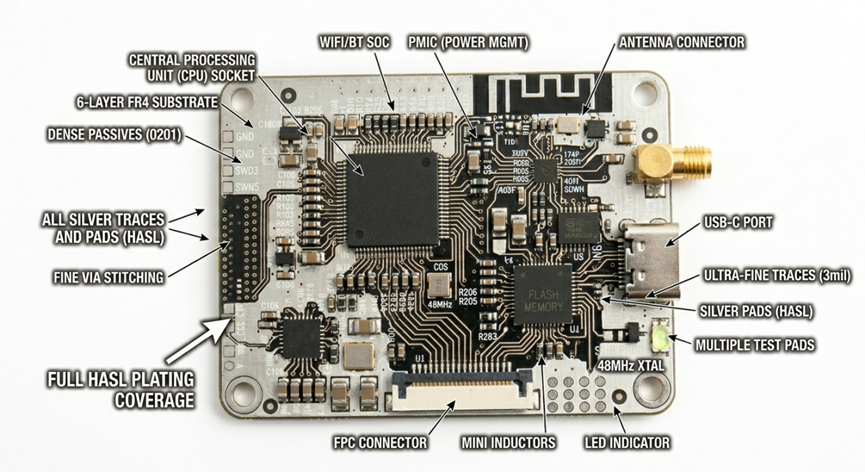
HASL finished PCB
HASL (Hot Air Solder Leveling) is the most traditional surface finish option to use, as it first dips the board into hot liquid solder, then levels them with hot air afterward. It's a low-cost solution that produces an extremely durable surface finish; however, the surface will not be perfectly smooth after being leveled with hot air. That's perfectly acceptable for through-hole parts or for larger surface mount designs, but not ideal for using very fine-pitch parts. Think of HASL as being similar to a plain cup of black coffee: very simple, easy to depend upon, but somewhat rough around the edges.
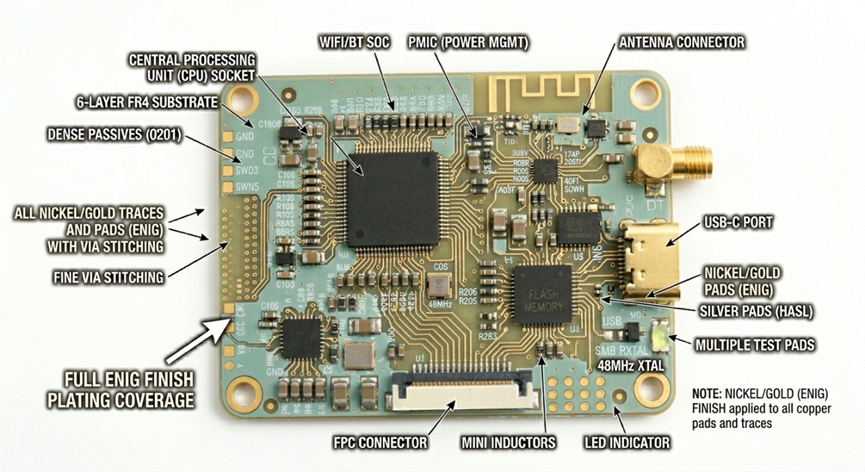
ENIG finished PCB
ENIG (Electroless Nickel Immersion Gold) is considered the premium surface finish option. ENIG produces a very flat/smooth surface that provides excellent solderability, corrosion resistance, and is a great surface finish for BGAs and high-density surface mount designs. ENIGs drawbacks are that they cost significantly more than HASL and you will need to carefully control the ENIG processes to prevent defects, such as "black pad." Think of ENIGs being similar to a highly crafted latte: smooth, refined, and expensive.
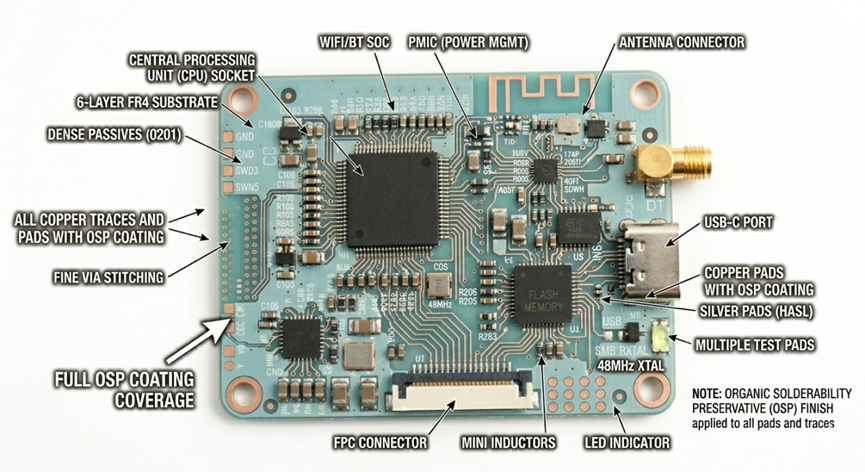
OSP finished PCB
OSP (Organic Solderability Preservatives) is the simplest form of PCB board finishes and it provides copper with a protective coating which protects its surface from oxidation. OSP is inexpensive and provides a fairly flat surface but is not very robust and does not have a long shelf life. It may degrade after multiple reflows, so pay attention to how you handle it. OSP is like a cheap, fast coffee - works well, cheap and works most effectively when used quickly.
So, what should you use? If your project has a low budget and a simple design then HASL is acceptable. However, for a complex and dense design where the use of high-speed technology, ENIG will normally be the better option. In the case of producing large quantities of products (cost-effective and with strict quality control) OSP would be the best.
The type of finished surface of your PCB will affect not only the overall looks of your PCB but also the quality of solderability, reliability and manufacturability. So, select wisely and your PCB will be forever grateful (in silence).
Sign In Or Register Comment after
No comments yet. Be the first to comment!