


An Introduction to Signals and Systems in Modern Engineering
 View
View
Welcome to the foundation of modern engineering. In typical applications of science and engineering, we have to process signals using systems. I believe that a modern signals and systems course should emphasize the practical and computational aspects in presenting the basic theory. This approach ensures that your understanding is grounded in practical applications, whether you are designing telemetry links for drones or developing antennas for telecommunications.
A signal represents some information. Systems carry out tasks or produce output signals in response to input signals. For example, a flight controller receives continuous sensor data and adjusts motor speeds accordingly. Due to advances in digital systems technology, it is highly advantageous to process continuous signals using digital systems by converting the input signal into a digital signal.
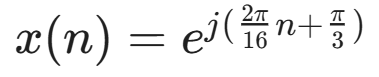
Practical signals have an arbitrary amplitude profile, so these signals must be represented in terms of simple and well-defined mathematical signals for ease of representation and processing. In my text, we frequently utilize the discrete complex exponential signal. One specific example is defined exactly as:
Sign In Or Register Comment after
No comments yet. Be the first to comment!