


Start Your Embedded Systems Journey - ESP32 or Arduino?
 View
View
If you're starting embedded systems, the first confusion is:
👉 “Should I begin with Arduino or ESP32?”
Here's the simplest way to decide without getting overwhelmed.
Step 1: Learn How Hardware Works
Start with → Arduino Uno
Why this is the best starting point:
- No WiFi, no background complexity
- Code runs step-by-step (easy to debug)
- Helps you understand:
- GPIO (input/output)
- sensors
- actuators (LEDs, motors)
Programming Language (Arduino)
- Uses C/C++ (Arduino-style)
- Simplified functions:
setup()loop()
👉 Very beginner-friendly—no need to manage OS or multitasking
Step 2: Build Real Connected Systems
Move to → ESP32
Why upgrade to ESP32:
- Built-in WiFi + Bluetooth
- Supports multitasking (FreeRTOS)
- Suitable for real applications:
- IoT
- remote control
- cloud integration
Programming Language (ESP32)
- Also uses C/C++ (Arduino IDE or ESP-IDF)
- Advanced features:
- multitasking (FreeRTOS)
- networking stacks
👉 Slightly more complex, but much more powerful
Beginner Project Roadmap
Level 1 (Arduino)
- Blink LED
- Button input
- Temperature sensor
- Motor control
👉 Goal: Learn hardware + basic C/C++ logic
Level 2 (ESP32)
- Web server (control LED from browser)
- WiFi sensor dashboard
- Bluetooth control
👉 Goal: Learn networking + system design
Common Beginner Mistake
Starting directly with ESP32:
- More complex debugging
- Background tasks (harder to understand)
- Requires better coding understanding
👉 Result: confusion instead of learning
The Smart Learning Path
Arduino → Learn C/C++ basics + hardware
ESP32 → Apply it to real connected systems
For a deeper comparison:
https://jlcpcb.com/blog/esp32-vs-arduino
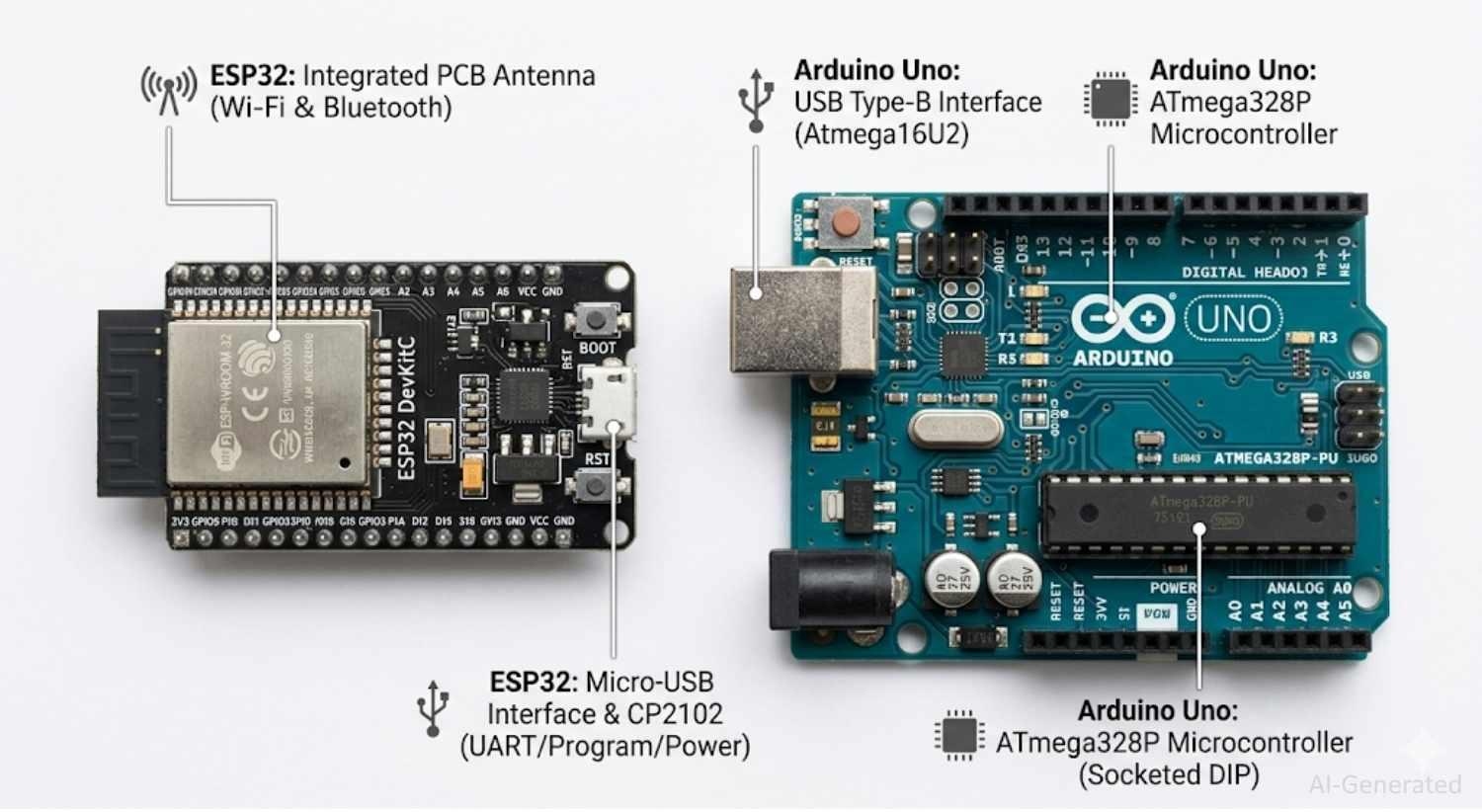
Microcontrollers
Sign In Or Register Comment after
No comments yet. Be the first to comment!