


 View
View
Speed up deep sleep wake: Store your Wi-Fi channel and BSSID in RTC memory (rtcData.bssid, rtcData.channel) on the first successful connection. Use WiFi.begin(ssid, password, channel, bssid, true) on subsequent wakes to skip the channel scan. This cuts reconnect time from ~5 seconds to ~1 second a massive battery savings.
The ADC Problem You Need to Know About
The ESP8266 has one ADC input (A0), with a 10-bit resolution and a 0–1V input range. There's a catch that trips up beginners constantly: you cannot use analogRead() reliably while Wi-Fi is active. The Wi-Fi component uses the same ADC that analogRead() uses. Intensive use of analogRead() can cause the Wi-Fi to have issues.
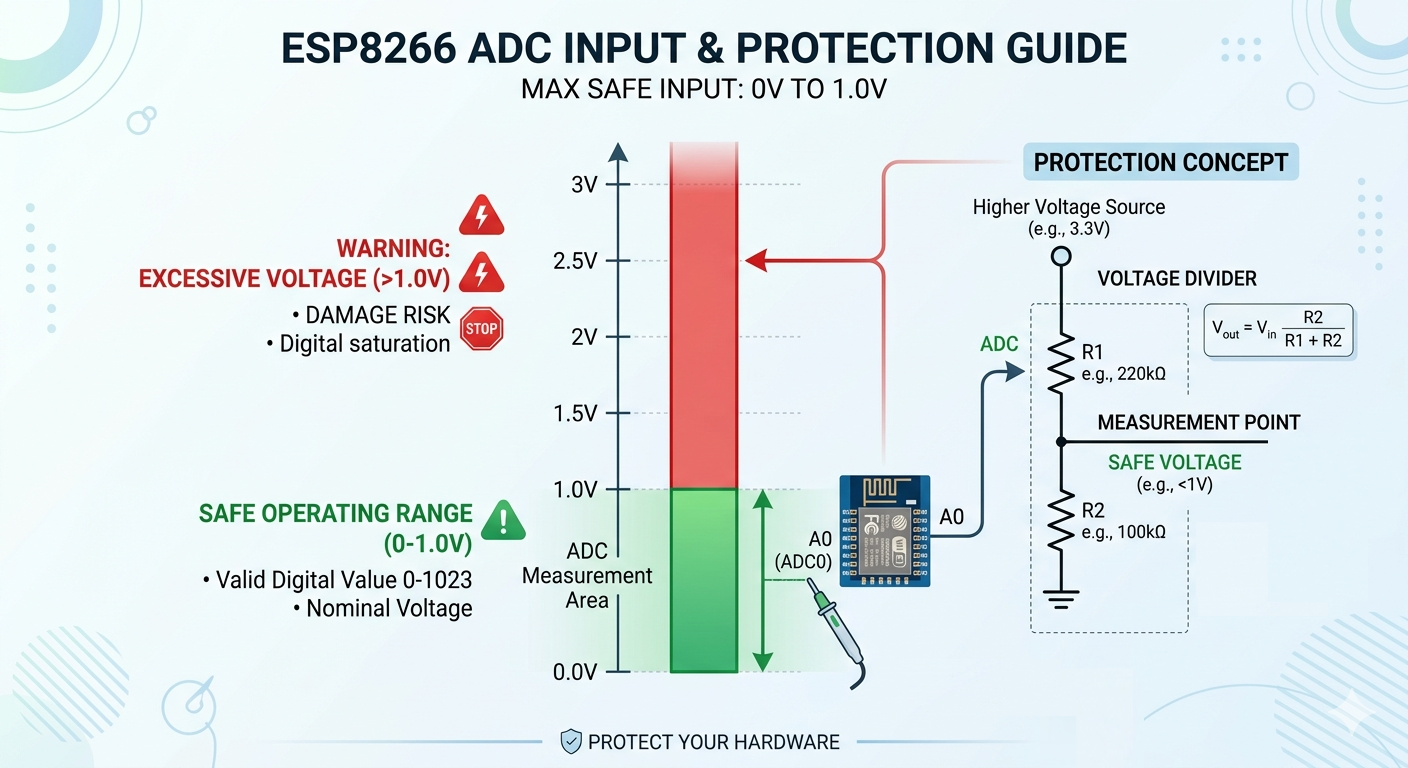
The workaround: call WiFi.forceSleepBegin() before your ADC read, call yield(), read the ADC, then call WiFi.forceSleepWake() to resume. This works but adds latency. For designs where you need continuous ADC readings with Wi-Fi active, use an external ADC (ADS1115 via I2C) instead.
When to Still Use the ESP8266 in 2025
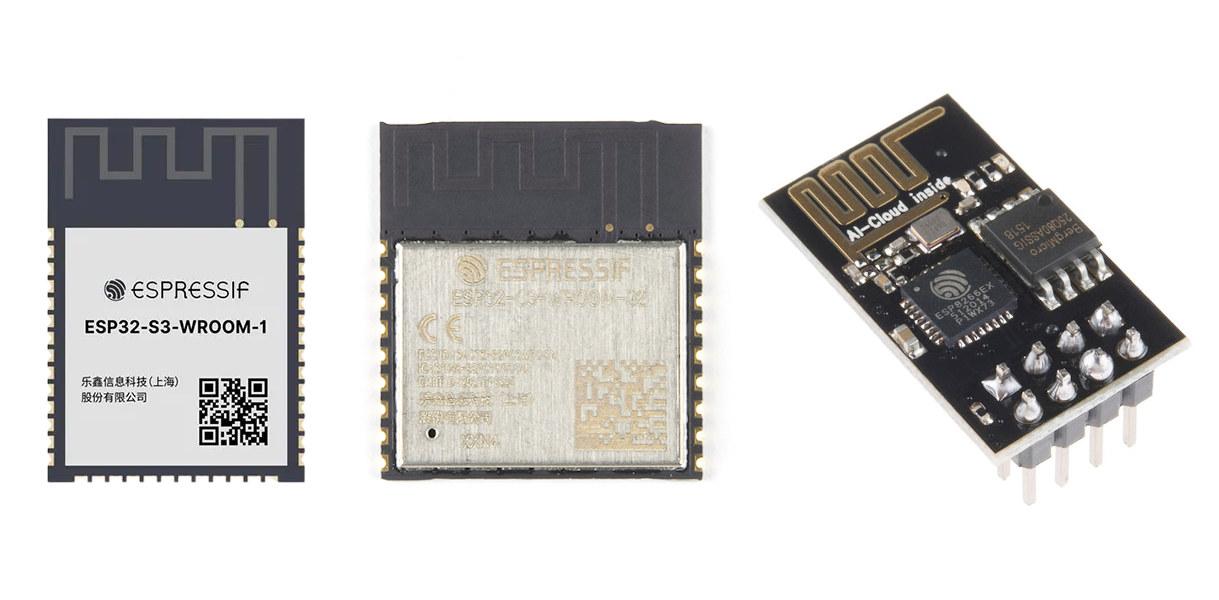
Honest answer: for most new designs, use the ESP32-C3 instead. Same cost, better architecture, BLE added, more RAM, better ADC. The ESP32-C3 is generally intended by Espressif to replace the well-known ESP8266. All ESP32 variants have roughly 5× the amount of RAM compared to ESP8266.
But the ESP8266 is still valid when you have existing ESP8266 code and don't want to port it, when you're manufacturing an existing product with established supply chain, when you need to match a specific module footprint, or when you're teaching and have existing course material built around it.
The ESP8266 isn't dead. It's just not the first choice anymore. The chip that democratized Wi-Fi IoT deserves respect, just not unconditional loyalty.
If your firmware is already stable, certified, and deployed in the field, switching to a newer chip like ESP32-C3 introduces validation overhead, potential bugs, and certification costs that may not be justified. On the other hand, for any new design, the long-term benefits of a modern architecture, better memory headroom, improved peripherals, and active ecosystem support, almost always outweigh the short-term convenience of sticking with the ESP8266. The key is not to treat the ESP8266 as outdated, but to recognize it as a mature, well-understood platform and choose it deliberately, not by habit.
Sign In Or Register Comment after
No comments yet. Be the first to comment!