


The ESP Family, AI Acceleration, RISC-V, and How to Choose
 View
View
The ESP Family: From a $1 Wi-Fi Chip to a Full Microcontroller Ecosystem
Before, we covered the foundational ESP chips: the ESP8266 that ignited the maker revolution, the classic ESP32 that still dominates IoT projects, and the security-focused ESP32-S2. Now we turn to the cutting edge, chips that bring AI acceleration to the edge, embrace the open RISC-V architecture, and enable next-gen smart home standards like Matter.
The Advanced Chips, What Are They Actually!
ESP32-S3, The One That pushes the boundary between microcontrollers and edge AI processors
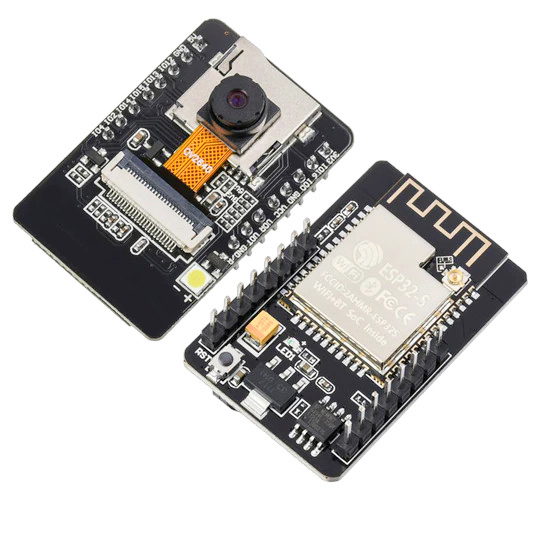
This is where it gets exciting. The S3 uses dual Xtensa LX7 cores (a proper step up from the LX6) and adds the Processor Instruction Extensions (PIE), a set of SIMD vector instructions specifically designed for neural network inference and signal processing workloads. It supports Octal-SPI PSRAM up to 8 MB at 640 Mbps, and includes native USB OTG. Pair it with a camera module and you have a vision AI system for under $10 in BOM cost.
I've seen ESP32-S3 boards running face detection at 10–15 FPS, wake-word detection, and real-time spectral analysis, tasks that a few years ago required a dedicated DSP chip. The PIE instructions give you roughly 2–5× the neural network throughput of a standard LX6 core, depending on the model and quantization. For edge AI applications, this chip is genuinely impressive. The S3 also includes 45 programmable GPIOs and a native DVP camera interface for DMA-based frame capture.
C3, C6, H2, The RISC-V New Wave
Espressif's decision to adopt RISC-V for the C and H series was a bold move, and it's paying off. The ESP32-C3 is a single-core 160 MHz RISC-V chip with BLE 5.0 and Wi-Fi 4, essentially a modern replacement for the ESP8266 with BLE added and better toolchain support. It includes 400 KB of SRAM and is priced around $0.90 in volume.
The ESP32-C6 is the one to watch for smart home applications. It adds Wi-Fi 6 (802.11ax) and 802.15.4 (Thread + Zigbee), making it the first ESP chip that's genuinely Matter-ready out of the box. It runs a 160 MHz RISC-V core with 512 KB of SRAM and BLE 5.3. If you're building anything for the smart home market, the C6 is worth designing around right now.
The ESP32-H2 drops Wi-Fi entirely and focuses on 802.15.4 (Thread/Zigbee) plus BLE 5.3. It's optimized for battery-powered mesh endpoints where Wi-Fi overhead would drain your battery life. The H2 achieves the lowest deep sleep current of the family (~2.5 µA) and the lowest active TX current (~72 mA at 0 dBm). It runs a RISC-V core at 96 MHz and includes 320 KB of SRAM.
How to Actually Pick One
| Your Need | Best Pick | Why |
|---|---|---|
| Simple WiFi, lowest BOM cost | ESP32-C3 | BLE 5.0 + WiFi, modern RISC-V core,~$0.90 in volume |
| General IoT, rich peripherals | ESP32 (classic) | 10+ years of community, libraries, examples |
| AI / vision / voice | ESP32-S3 | PIE vector acceleration + Octal PSRAM + DVP camera interface |
| USB device (HID/CDC/MSC) | ESP32-S3 or S2 | Native USB OTG, no CH340 needed |
| Matter / smart home hub | ESP32-C6 | Wi-Fi 6 + Thread/Zigbee built in |
| Zigbee/Thread mesh endpoint | ESP32-H2 | No Wi-Fi overhead, longest battery life |
| Legacy design upgrade | ESP32-C3 | Drop-in ESP8266 replacement with BLE |
One Last Thing Before You Pick a Chip
Check supply availability before committing to a design. The semiconductor shortage of 2021–2022 taught everyone a painful lesson: the "cheapest" chip is worthless if you can't get it. Espressif publishes longevity commitments for their flagship products, the company guarantees a minimum supply period of 12 years from product launch for all listed devices. The ESP32-WROOM-32E module is guaranteed to be available until at least January 1, 2028. Newer modules like the ESP32-S3-MINI carry support periods extending to 2033. For a product you plan to manufacture for years, verify the supply chain before the first PCB spin
Sign In Or Register Comment after
No comments yet. Be the first to comment!