


Differential Pairs Travel Together for a Reason
 View
View
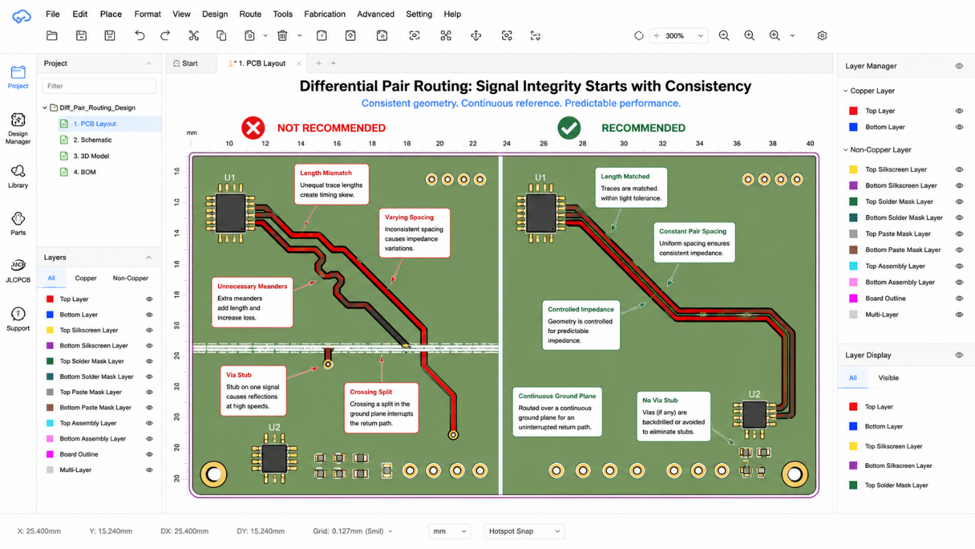
Differential pairs are designed to carry complementary signals that should arrive at the receiver at the same time. That's why keeping the traces together is more than just making the layout look organized.
During routing, engineers pay close attention to consistent spacing, matched trace lengths, and a continuous reference plane. These factors help maintain controlled impedance and minimize timing differences between the two signals.
A differential pair isn't simply two traces routed side by side. It's one transmission path that should be treated as a matched pair from start to finish.
Layout
Sign In Or Register Comment after
No comments yet. Be the first to comment!