


 View
View
DIY Solid State Relay Module
For more info: https://www.hackster.io/electroboy001/diy-solid-state-relay-module-e170f3
DIY solid-state relay (SSR) module
Relays are the most useful and stable AC power switching components. The regular size of relays is big because of a mechanical moving actuator and a coil. The main problem is that it takes a lot of current and, due to the mechanical action of actuators, there are sparks between both terminals. Which may cause serious problems like tear down, terminal welding and damaging. But there is one solution to all of these problems known as SSR (solid state relays). They are electronic based switches which can be used for fast switching of AC appliances. These electronic AC switches are known as TRIAC.
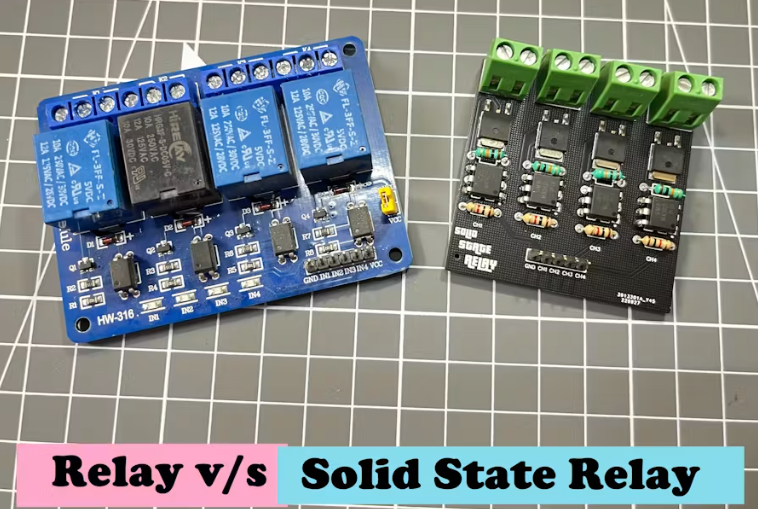
TRIAC vs SCR
A TRIAC is a three-terminal electronic component that conducts current in either direction when triggered. TRIACs differ from SCRs in that they allow current flow in both directions, whereas an SCR can only conduct current in a single direction. The bidirectionality of TRIACs makes them convenient switches for alternating current. Here we use a dedicated TRIAC driver, which helps in switching the TRIAC by AC cycle feedback either zero-voltage switching or random phase shift.
Circuit diagram with the MOC3021 TRIAC driver
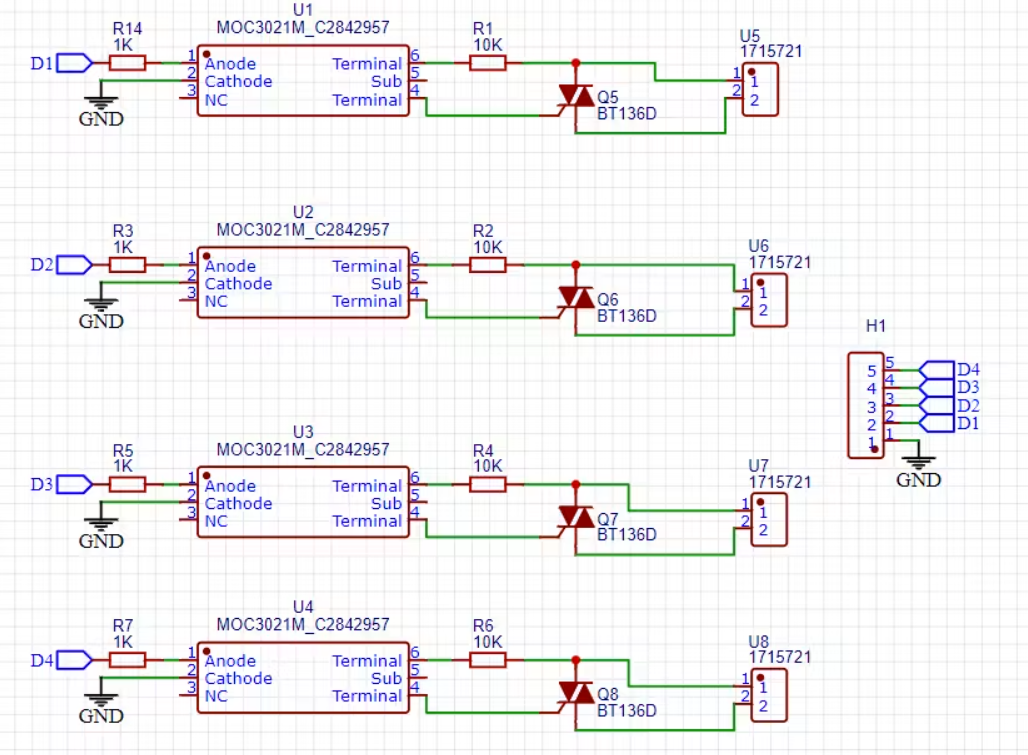
Components: BT136 (SMT package), MOC3021 (TRIAC driver), 10k and 1k resistors, pin headers and screw terminals, and PCB prototypes from JLCPCB. The circuit has a DIAC based optocoupler known as the TRIAC driver, which has an LED and DIAC inside and is triggered with the help of DC voltage to the LED terminal. This provides full insulation of the supply to the mains voltage.
SMT-assembled PCB:
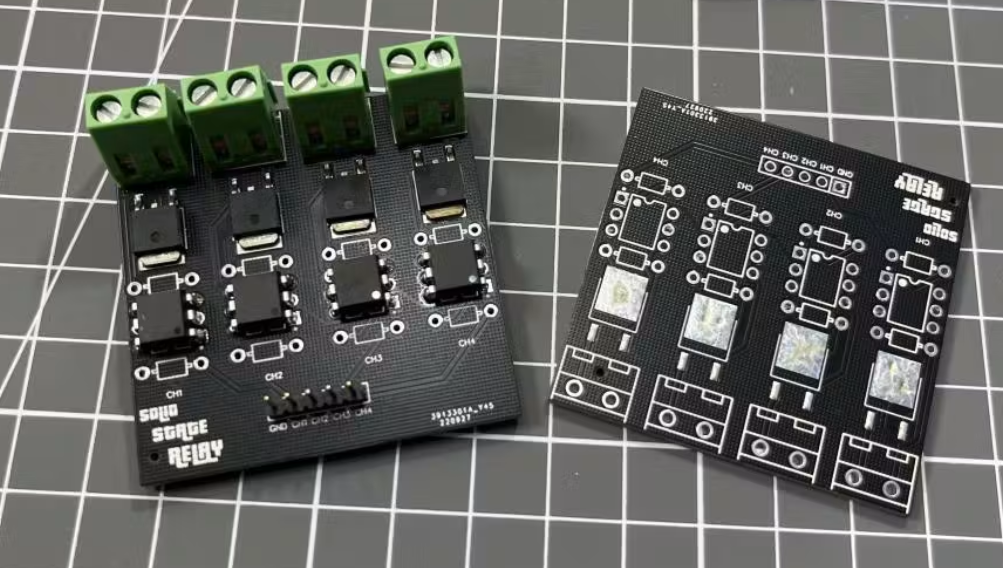
I used SMT assembly service from JLCPCB, because I want to make the PCB clean and small. It is made for smaller loads under 50 watts per channel only, because I am not using any heatsink. I made the PCB according to the channel selection; the front header can be directly used with the microcontroller. A total of 4 channels are there which can be used separately with different GPIO pins.
Working SSR connected to an AC load:
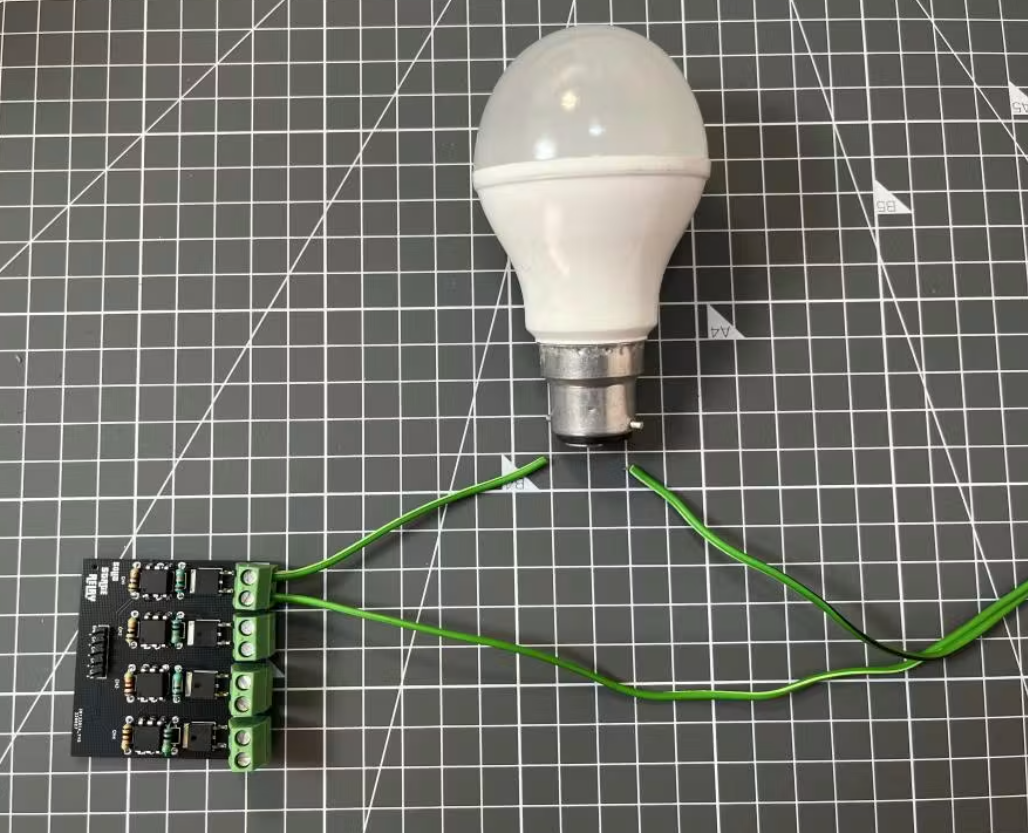
This solid-state relay works in the same manner as mechanical sugar-cube relays, but this time we have only two terminals. When there is no trigger on the Gate pin, the TRIAC output resistance is in Mega-ohms, which switches off the appliances connected to it. This module works fine on +5 volts and consumes just 10mA of current, which is way lesser than old mechanical relays.
#solid state relay module#
 #solidstaterelaymodule#
Sign In Or Register Comment after
No comments yet. Be the first to comment!