


Fast Charging Module for Lithium Batteries
 View
View
Original Hackster article: https://www.hackster.io/sainisagar7294/fast-charging-module-for-lithium-batteries-a1eaae
IP2312-based 3A fast-charging module
The TP4056 is one of the most popular Li-ion charging modules. It is cheap, widely available, and paired with a built-in protection IC. But it uses a linear voltage regulator internally, which means significant heat at higher currents and a practical ceiling of around 450mA before the module gets too hot to handle. I built a custom board around the IP2312, a buck-based charging IC that delivers up to 3A at 94% efficiency.
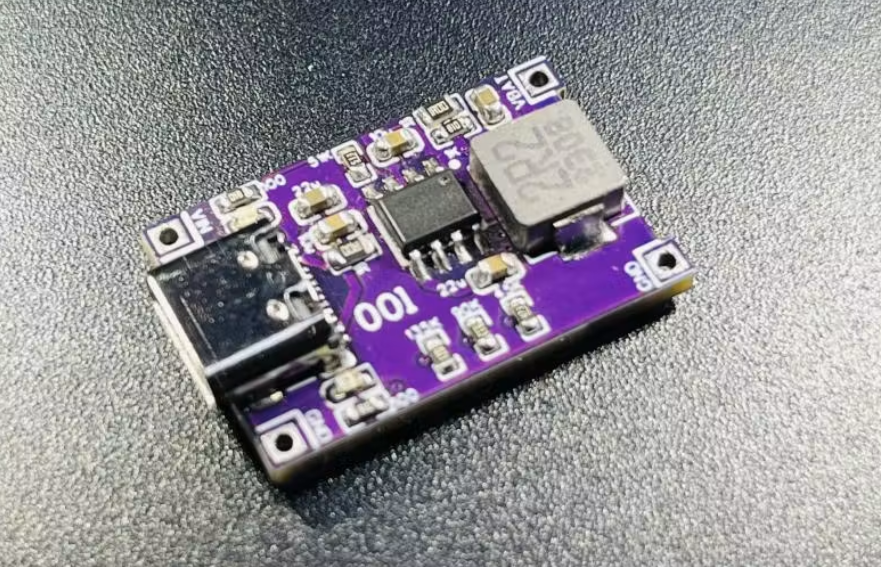
Why IP2312?
Unlike the TP4056, the IP2312 uses a built-in buck converter running at 750kHz which means far less heat, far better efficiency. All protection features (overvoltage, undervoltage, over-temperature, trickle charging, short circuit) are packed into the IC itself, so no separate protection chip is needed.
Key specs:
• Input: 4.5–5.5V via USB-C or solder pads
• Max charging current: 3A (set via external resistor)
• Default nominal current: 2.1A
• Efficiency: 94% at 3.7V/2A
• Trickle charge current: 100mA
• Standby current: 40µA
• Overvoltage cutoff: Vin > 5.6V
• Battery voltage support: 4.20V / 4.30V / 4.35V / 4.40V
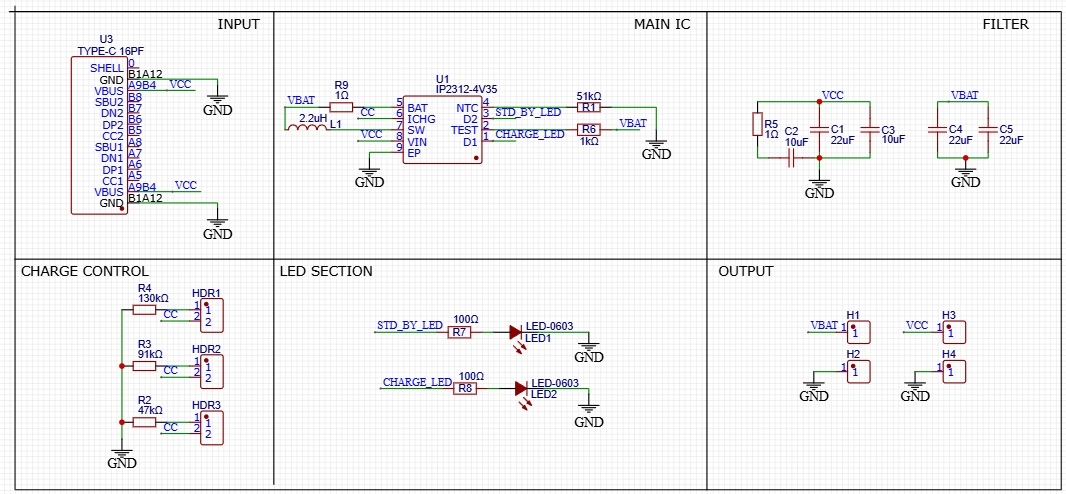
Schematic — buck converter section and filter stage
PCB Design
I kept the same form factor as the TP4056 board for a drop-in upgrade. Charging current is set by solder pads on the PCB back — left floating, it defaults to 2.1A. The layout follows input-to-output flow to isolate switching transients. The NTC pin is pulled down with a 51kΩ resistor as I am using this as a breakout board. Two status LEDs monitor charging.
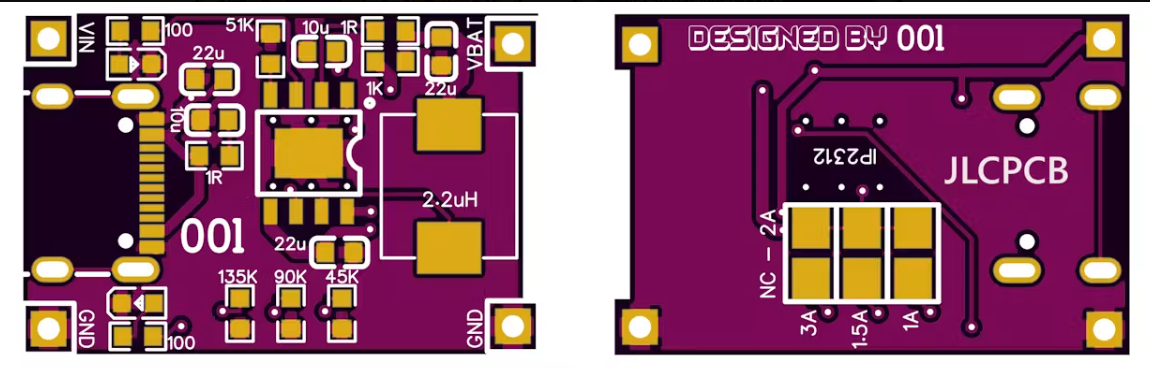
PCB — same footprint as TP4056, USB-C input
Testing
I powered up with a 100mA current-limited supply first worked first try. Then charged a 3.9V Li-ion at default settings. Comparison with the same 4.0V battery:
• TP4056: 450mA
• IP2312: ~1A
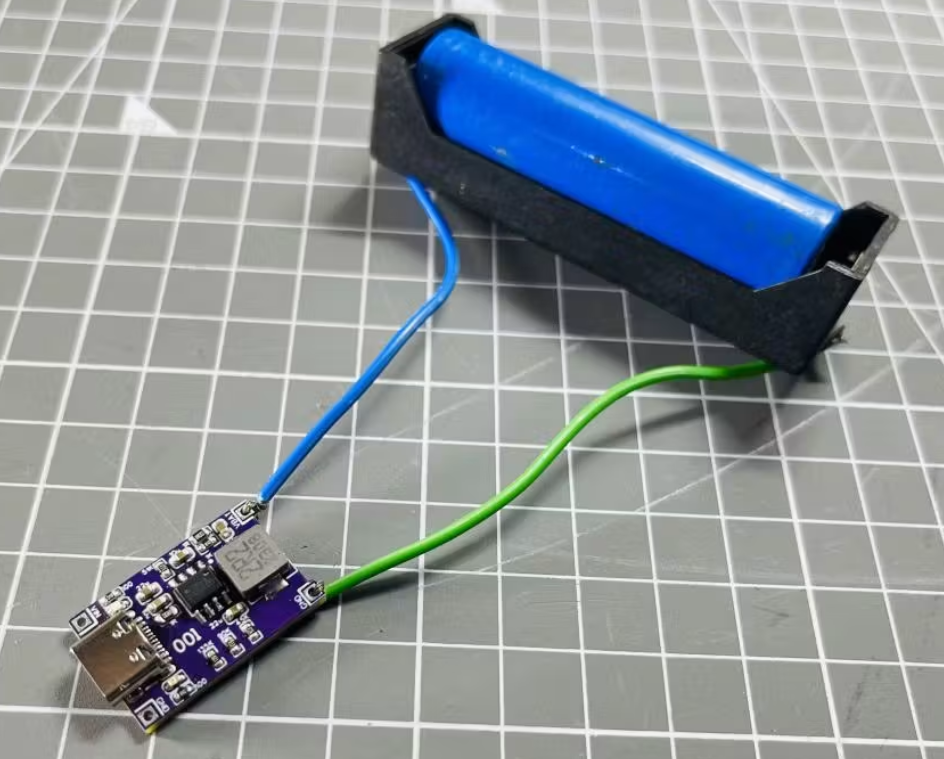
More than double the charging rate. Heat was minimal at full load, confirming the 94% efficiency claim. All protection features tested normal.
Sign In Or Register Comment after
No comments yet. Be the first to comment!