


One Floating Ground Can Make an Entire Circuit Behave Unpredictably
 View
View
One of the most confusing problems with electronics is a circuit that appears to be wired correctly but simply refuses to work as expected. The microcontroller powers up, sensors respond intermittently, serial communication fails randomly, or ADC readings fluctuate without any obvious reason.
In many cases, the culprit isn't faulty hardware or buggy firmware. It’s missing or improperly connected ground reference.
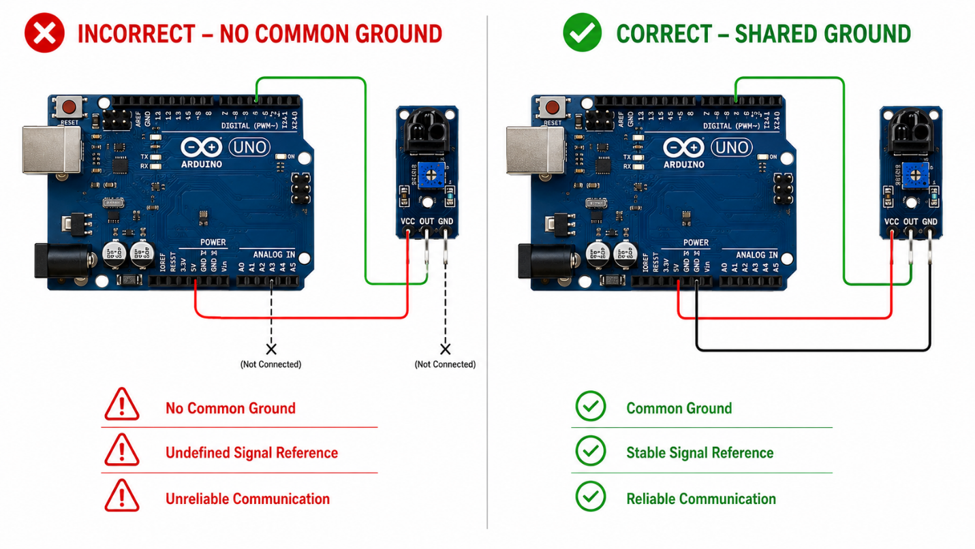
Every voltage measurement in an electronic circuit is made relative to a reference point. If two circuits don't share the same reference, a signal that appears valid on one device may become meaningless to another. This is why engineers often say, "Voltage only has meaning when there is a common reference."
Why a Common Ground Matters
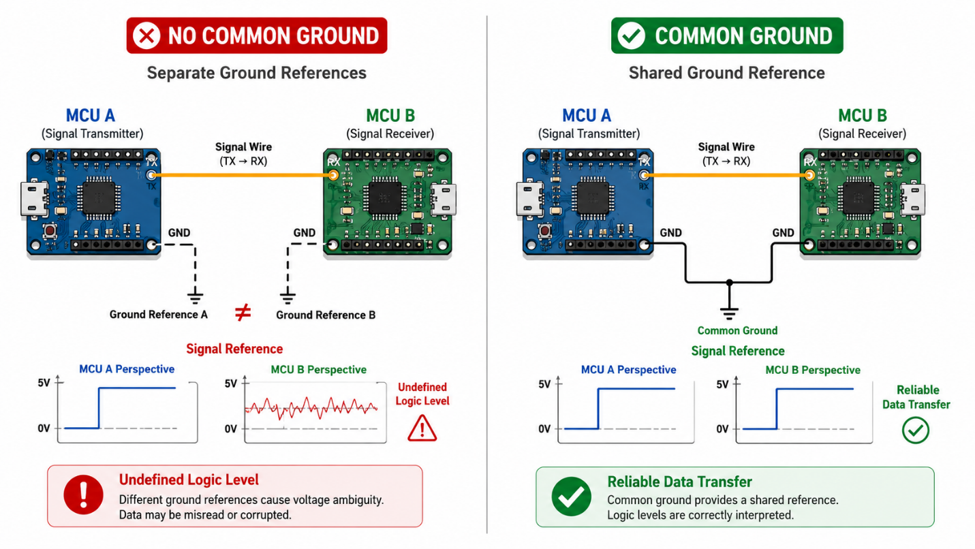
Digital signals are not measured as absolute voltages; they are measured relative to ground.
For example, when one microcontroller outputs a 3.3V logic HIGH, the receiving device interprets that voltage relative to its own ground reference. If the two devices do not share the same reference voltage, the received logic level may shift, causing unreliable communication or incorrect logic detection.
This issue frequently appears when connecting development boards, external ADC modules, sensors, motor drivers, or laboratory instruments powered by different supplies.
When You Shouldn't Connect Grounds
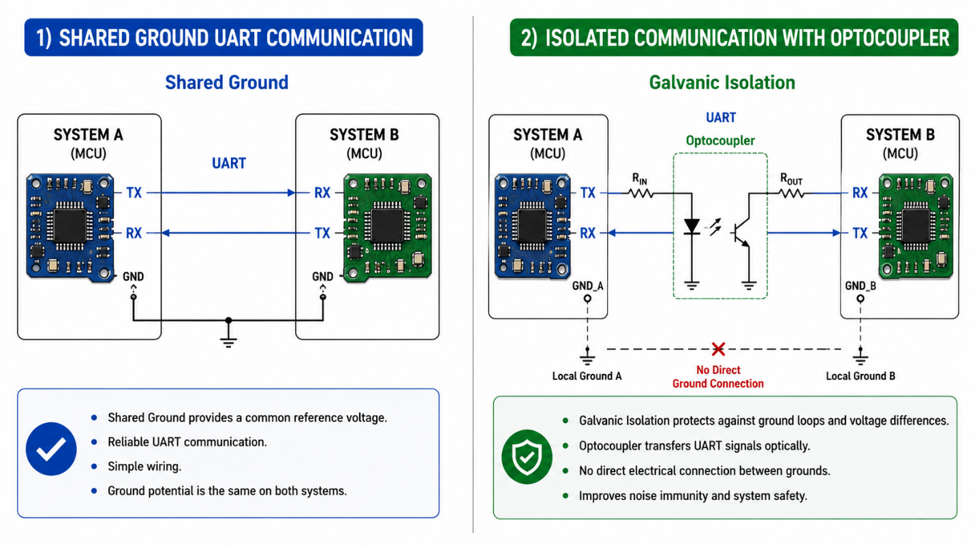
Although sharing ground is important in many electronic systems, there are situations where a direct ground connection is intentionally avoided.
Medical equipment, high-voltage industrial systems, isolated power supplies, and some communication interfaces use galvanic isolation to prevent dangerous currents from flowing between systems. In these applications, components such as optocouplers, digital isolators, or isolated DC-DC converters safely transfer information without creating a direct electrical connection.
The key is understanding whether your design requires a shared reference or electrical isolation.
Practical Tips
Whenever I connect two electronic devices together, I ask one simple question before powering them on:
"Where is the signal reference?"
If the answer is unclear, I stop and verify the grounding arrangement before continuing.
This simple habit has helped me avoid countless hours of troubleshooting caused by unstable communication, noisy analog measurements, and intermittent system behavior.
Ground is more than just another wire it is the electrical reference that allows signals to be interpreted correctly. Whether you're connecting sensors, development boards, or industrial controllers, understanding when to share ground and when to isolate it is one of the most valuable skills in practical electronics.
#ElectronicTips# #Grounding# #EmbeddedSystems# #SignalIntegrity# #CircuitDesign# #Electronics#
 #ElectronicTips#
#Grounding#
#EmbeddedSystems#
#SignalIntegrity#
#CircuitDesign#
#Electronics#
#ElectronicTips#
#Grounding#
#EmbeddedSystems#
#SignalIntegrity#
#CircuitDesign#
#Electronics#
Sign In Or Register Comment after
No comments yet. Be the first to comment!