


Why Your Power Supply Shuts Down When You Turn on a Device
 View
View
A common situation in electronic systems is a device that works perfectly after startup but fails the moment power is applied. The power supply may shut down, the microcontroller may restart repeatedly, or the voltage may suddenly drop before returning to normal.
Many engineers initially suspect a faulty circuit or insufficient power supply capacity. However, the actual cause is often inrush current.
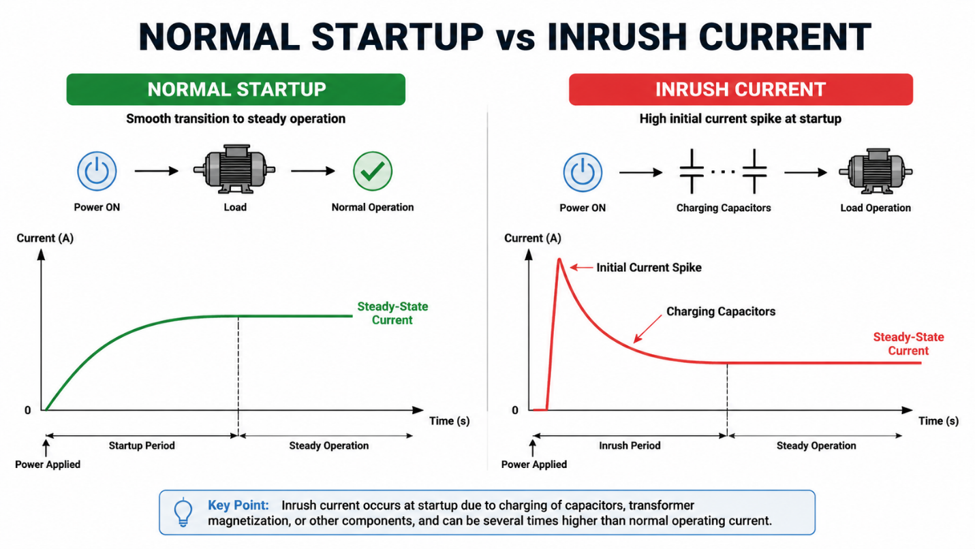
Inrush current is the temporary surge of current drawn by an electronic system immediately after power is connected. This short-duration event can be several times higher than the normal operating current and can stress power supplies, connectors, switches, and protection circuits.
Understanding inrush current is especially important in systems with large capacitors, motors, switching regulators, and battery-powered devices.
Why Inrush Current Happens
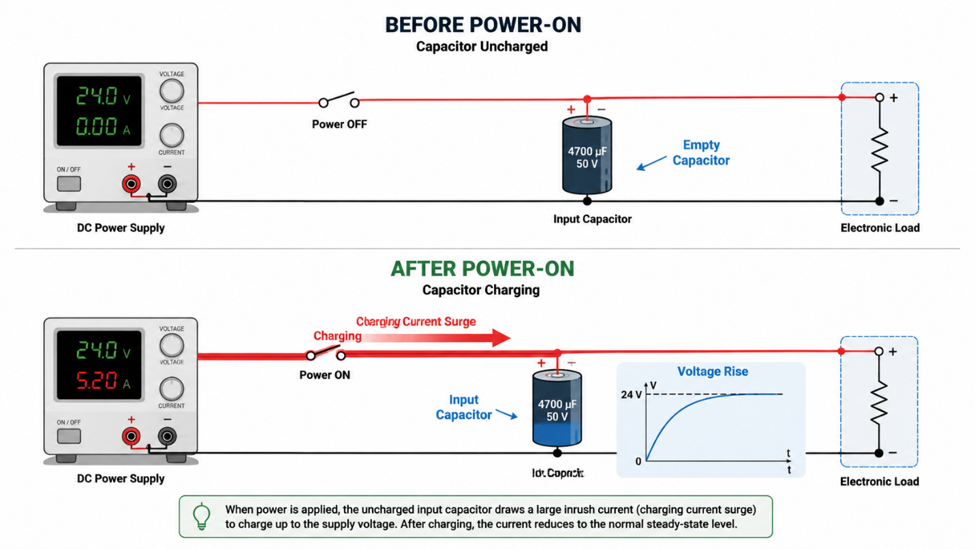
One of the most common causes of inrush current is charging large capacitors at the input of a circuit.
When power is first applied, an empty capacitor behaves almost like a short circuit for a moment. The power supply attempts to charge the capacitor as quickly as possible, causing a sudden current surge.
Other sources of inrush current include transformers, motors, LED drivers, and switching power converters with large input capacitance.
Although the event may only last milliseconds, it can trigger over-current protection or cause voltage instability in the entire system.
Common Protection Methods
Several techniques can reduce the impact of inrush current.
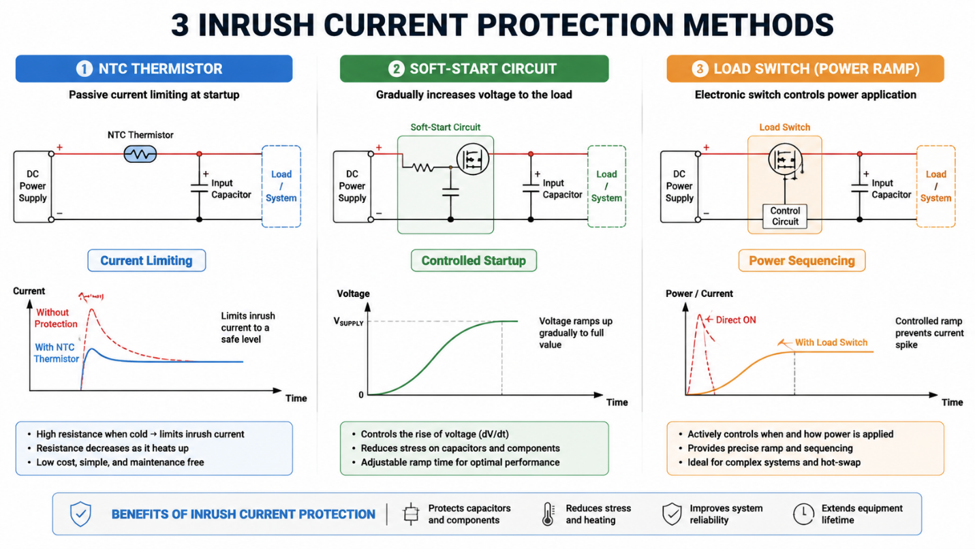
A simple method is adding an NTC thermistor, which has higher resistance when cold and lower resistance after heating. This limits the initial current surge while allowing normal operation afterward.
More advanced systems use soft-start circuits, load switches, or hot-swap controllers that gradually increase the applied voltage and control the startup sequence.
The correct solution depends on the application, required startup speed, current level, and reliability requirements.
Recommended Devices
| Device | Type | Typical Application |
|---|---|---|
| MF72 Series | NTC Inrush Limiter | Power supply input protection |
| TPS22919 | Load Switch | Controlled power startup |
| TPS25947 | Hot-Swap Controller | Industrial power systems |
| LTC7000 Series | Power Control IC | High-current applications |
Engineering Note
A power supply rated for the average operating current may still fail during startup if it cannot handle the temporary inrush current. Always check both steady-state and peak current requirements.
Inrush current is a temporary event, but its impact on system reliability can be significant. Understanding where startup current spikes come from and choosing the appropriate protection method can prevent unexpected resets, power supply failures, and damaged components.
Good power design is not only about supplying enough current during operation it is also about managing what happens the moment the system turns on.
#PowerAndEnergy# #InrushCurrent# #PowerSupply# #CircuitProtection# #PowerElectronics# #Electronics#
 #PowerAndEnergy#
#InrushCurrent#
#PowerSupply#
#CircuitProtection#
#PowerElectronics#
#Electronics#
#PowerAndEnergy#
#InrushCurrent#
#PowerSupply#
#CircuitProtection#
#PowerElectronics#
#Electronics#
Sign In Or Register Comment after
No comments yet. Be the first to comment!