


Why a Bench Power Supply Is Better Than Random USB Adapters for Circuit Testing
 View
View
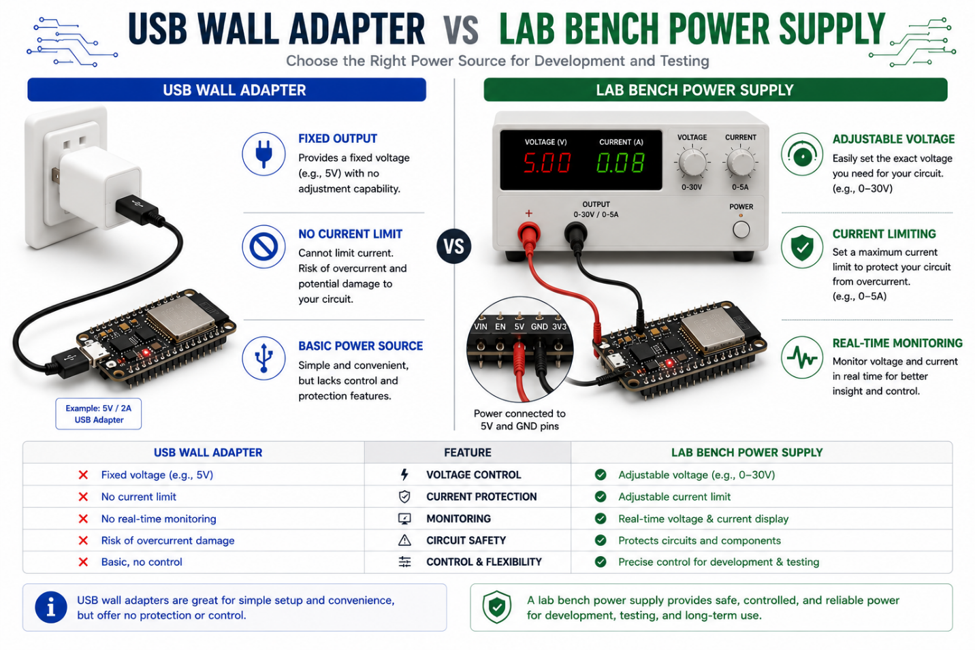
When testing a new electronic circuit, many beginners simply power it using a USB charger or a phone adapter. While this may work for simple projects, it offers very little control over voltage and current.
A bench power supply is designed specifically for electronics development. Unlike a fixed USB adapter, it allows engineers to adjust the output voltage, limit the maximum current, and monitor power consumption in real time.
These features make troubleshooting safer and can prevent expensive mistakes during the first power-up of a new PCB.
Why Current Limiting Matters
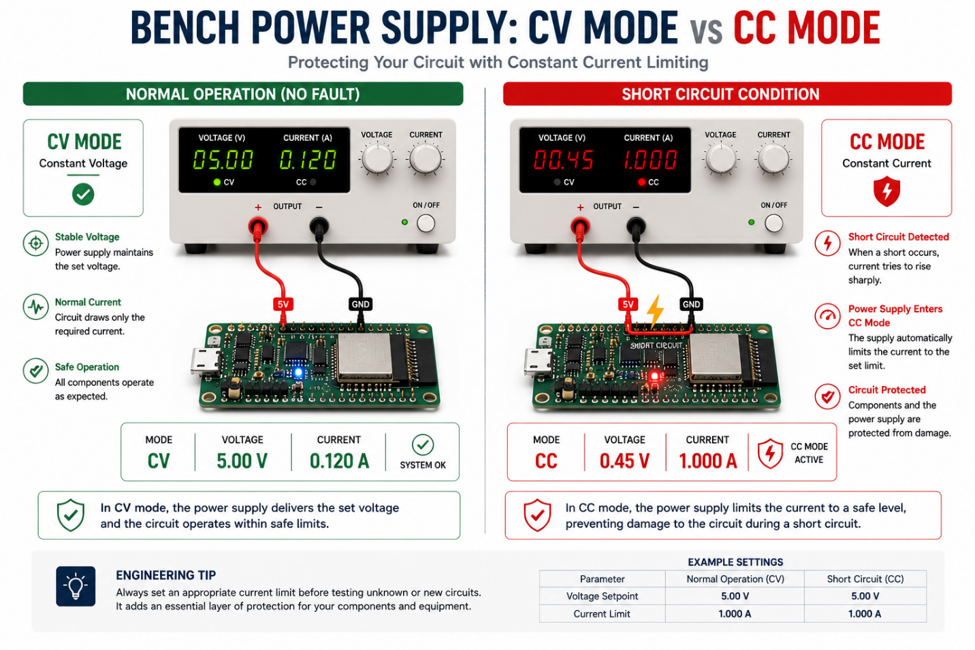
One of the most valuable features of a bench power supply is adjustable current limiting.
Imagine a newly assembled PCB with an accidental solder bridge. If powered by a high-current adapter, excessive current may quickly overheat components or damage traces.
With a bench supply, the current limit can be set before powering the board. If a fault exists, the supply enters constant current mode, helping protect the circuit while giving the engineer time to investigate the problem.
This simple feature often prevents damaged components during prototype testing.
Features Worth Looking For
When selecting a bench power supply, consider features that match your typical projects:
- Adjustable voltage range.
- Adjustable current limit.
- Clear digital voltage and current display.
- Stable low-noise output.
- Overvoltage and overcurrent protection.
- Memory presets for frequently used settings.
For embedded development, even an entry-level programmable supply can significantly improve the testing experience.
Recommended Bench Power Supplies
| Model | Best For | Key Features |
|---|---|---|
| UNI-T UDP3305S | Embedded Development | Triple output, programmable |
| Rigol DP832A | Professional Laboratory | Three isolated outputs, high accuracy |
| Korad KA3005P | General Electronics | Adjustable voltage and current |
| Siglent SPD3303X-E | R&D and Education | Low ripple, programmable outputs |
Engineering Tip
Before powering a newly assembled PCB for the first time, set a reasonable current limit. If the circuit immediately reaches the limit, switch off the power and inspect the board before increasing the current. This simple habit can save both components and debugging time.
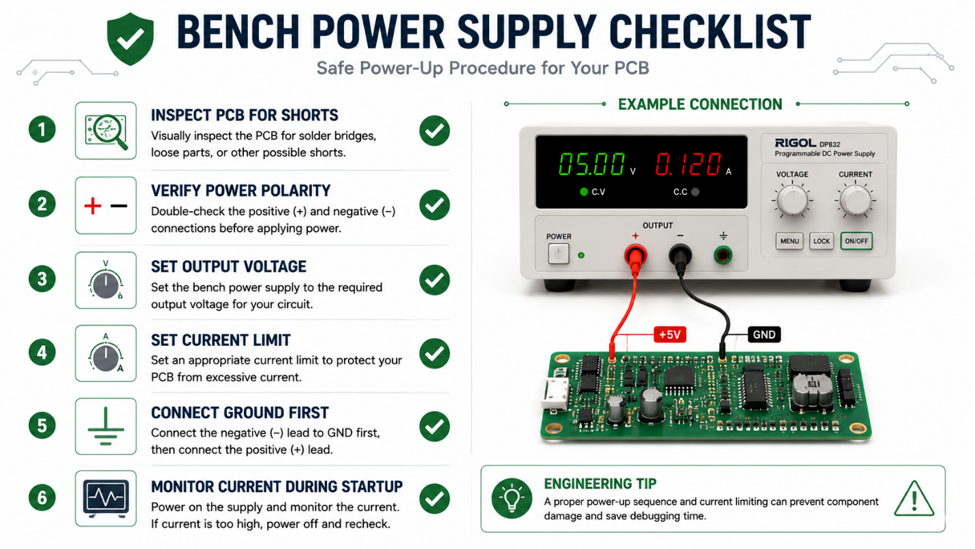
A bench power supply is more than just a source of voltage. It is an essential development tool that helps engineers power circuits safely, monitor electrical behavior, and protect prototypes during testing.
Whether you're building an Arduino project or developing a custom PCB, using a regulated bench power supply with adjustable current limiting can make troubleshooting easier and significantly reduce the risk of damaging new hardware.
#EquipmentAndTools# #BenchPowerSupply# #ElectronicsLab# #CircuitTesting# #EmbeddedSystems# #Electronics#
 #EquipmentAndTools#
#BenchPowerSupply#
#ElectronicsLab#
#CircuitTesting#
#EmbeddedSystems#
#Electronics#
#EquipmentAndTools#
#BenchPowerSupply#
#ElectronicsLab#
#CircuitTesting#
#EmbeddedSystems#
#Electronics#
Sign In Or Register Comment after
No comments yet. Be the first to comment!