


 Electronic Community Mechanical Community OSHWLab JLCPCB JLC3DP JLCCNC JLCMC JLCONE EasyEDA JLCCAN LCSC Cable LCSC Panel


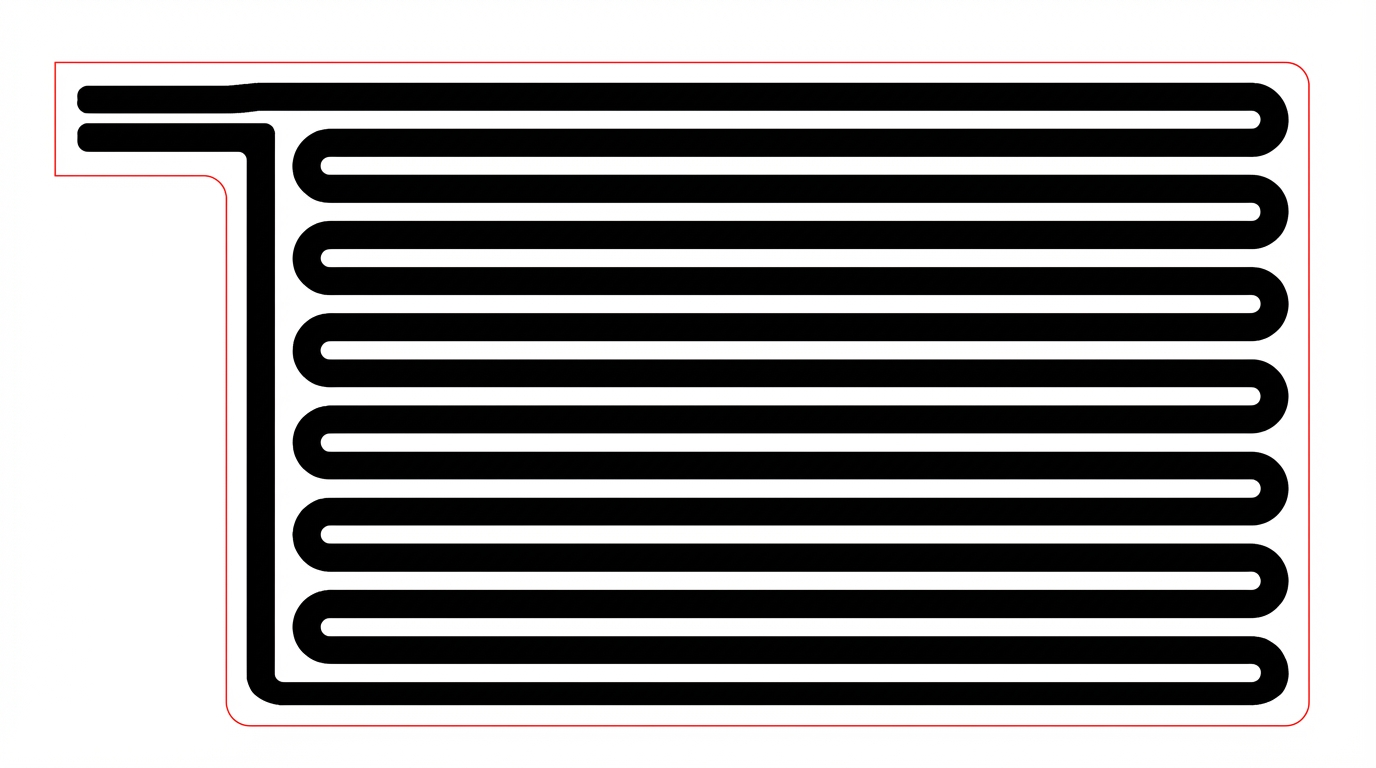
We are pleased to announce the release of the Flexible Heater Routing Tool!
You can access the tool via the following link:
https://jlcpcb-flexible-heater-routing-tool.netlify.app/
This tool enables you to independently verify whether your design meets the required specifications and is manufacturable, eliminating the need to wait until after order submission for validation. By using this tool, you can save valuable time and streamline your design process.
We encourage you to explore the tool and experience its benefits firsthand.
You can access the tool via the following link: https://jlcpcb-flexible-heater-routing-tool.netlify.app/


We are pleased to announce the release of the Flexible Heater Routing Tool!
You can access the tool via the following link:
https://jlcpcb-flexible-heater-routing-tool.netlify.app/
This tool enables you to independently verify whether your design meets the required specifications and is manufacturable, eliminating the need to wait until after order submission for validation. By using this tool, you can save valuable time and streamline your design process.
We encourage you to explore the tool and experience its benefits firsthand.
You can access the tool via the following link:
https://jlcpcb-flexible-heater-routing-tool.netlify.app/
You can access the tool via the following link: https://jlcpcb-flexible-heater-routing-tool.netlify.app/

We are pleased to announce the release of the Flexible Heater Routing Tool!
You can access the tool via the following link:
https://jlcpcb-flexible-heater-routing-tool.netlify.app/
This tool enables you to independently verify whether your design meets the required specifications and is manufacturable, eliminating the need to wait until after order submission for validation. By using this tool, you can save valuable time and streamline your design process.
We encourage you to explore the tool and experience its benefits firsthand.
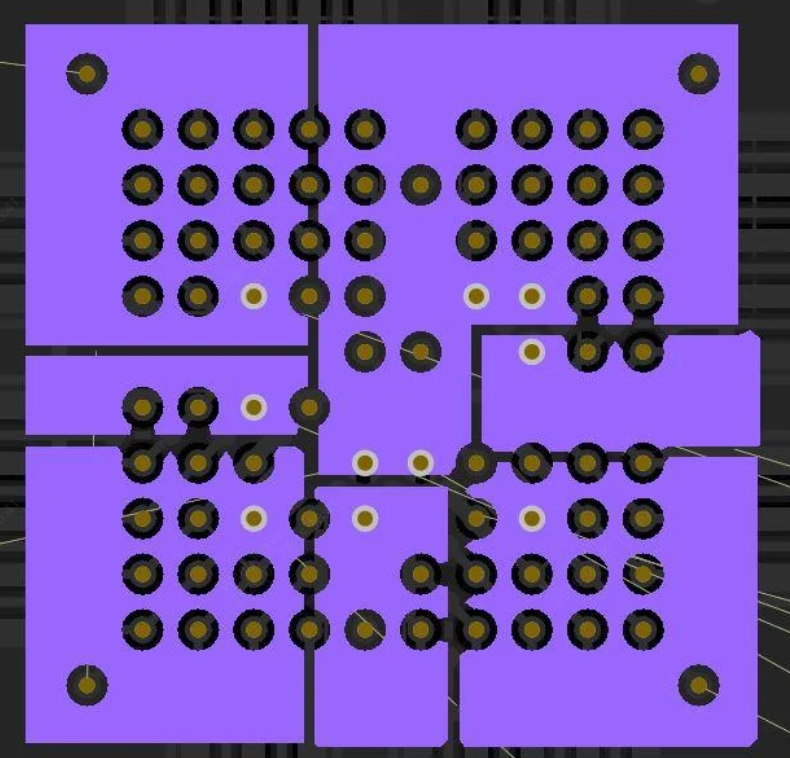
According to the BGA layout guidance, for 0.5mm pitch BGAs it is suggested to remove unused via pads on inner layers. https://jlcpcb.com/blog/bga-design-rules What is the minimum copper pour to drill-hole spacing for this on 6+ layer PCB with via-in-pad? And what is the minimum track to drill-hole spacing? Other pages state 0.2 mm but this wouldn't be compatible with routing on the inner layer as suggested in the BGA layout page. Example below with unused pads removed, and 0.12 mm hole to copper spacing in the photo.
If you are a heavy prototyper or working on a multi-board project, you might be leaving money on the table. Most people think one stencil equals one PCB design—but if your boards are not too big, why pay for three stencils when you only need one?
At JLCPCB, we want to help you optimize your workflow and keep your costs down. One of our most useful features is the ability to combine multiple different PCBs onto a single stencil frame.
How to set it up:
- Find the Option: On the stencil order page, look for the "Multiple PCBs on one stencil" option.
- Select "Yes": This alerts our engineers that you are panelizing different designs together.
- The "Secret Sauce": Don't forget to add a stencil remark. Describe your panelization or specific placement requirements so our team can ensure the apertures align perfectly with your various boards.
🚀 Ready to Optimize Your Next Build?
At JLCPCB, we support your custom designs with flexible manufacturing options that make your assembly faster, cheaper, and more precise.
- 🎁 Click to Claim Your $11 Stencil Coupon Here! Experience the premium PCB stencil now!
- ✨ New to JLCPCB? Sign up today to unlock your $123 New User Coupon Bundle!
We've all been there: you spend weeks perfecting a PCB layout, only to have the entire project sidelined by a bridge or a dry joint during reflow. Most of the time, the problem isn't your oven or your paste - it's the stencil.
If you're tired of "good enough" results and want professional-grade assembly without the professional-grade price tag, here is how JLCPCB Stencils are designed to help you succeed:
Precision That Actually Matters
We don't just "cut holes". We use over 30 high-precision laser cutting machines to ensure every aperture is burr-free and razor-sharp.
- The Material: We use premium 304 HTA stainless steel.
- The Accuracy: We maintain tolerances as tight as ±0.003mm. This level of precision is the difference between a clean solder "brick" and a messy smear that leads to shorts.
- Pro Upgrades: Need even better release? Our electropolishing and nano-coating options significantly improve paste transfer efficiency and reduce bridging on fine-pitch components.
Speed That Keeps Up with Your Ideas
In the world of prototyping, time is your most valuable resource.
- 12-Hour Production: Our fully automated lines can have your stencil ready in as little as 12 hours.
- 24-Hour Shipping: Most orders are out the door within a day of confirmation.
- Unbeatable Value: Professional precision starts at just $3 (100 × 100mm). You get tier-1 manufacturing quality on a maker's budget.
Your Design, Fully Supported
Every project is unique, so we don't limit your options. Whether you need a framed stencil for a production line or a frameless one for your bench, we've got you covered.
- Advanced Options: From custom outlines and thicknesses to step stencils and ultrasonic-resistant adhesives, we support the complex modifications you need to turn your vision into a physical reality.
🚀 Upgrade Your Next Build for Less
At JLCPCB, were committed to helping you build faster and better. Don't let a low-quality stencil be the bottleneck of your next great invention.
- 🎁 Click to Claim Your $11 Stencil Coupon Here! Experience the premium PCB stencil now!
- ✨ New User Bonus: Register today to unlock a $123 Welcome Coupon Bundle!
Whether you are starting a fresh project or realizing you forgot a stencil for an old board, we’ve made the ordering process incredibly flexible.
Depending on where you are in your design journey, here are the 3 easy ways to get your high-precision stencils:
Option 1: The "All-in-One" (PCB + Stencil Together)
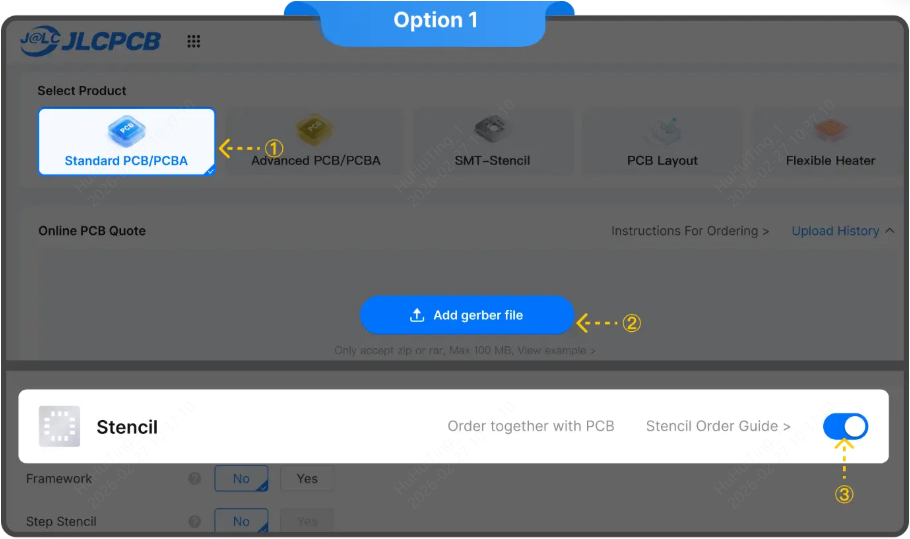
This is the most popular choice for new projects. After you’ve configured your PCB parameters on our order page, simply scroll to the bottom and check the "Stencil" option. This ensures your stencil and PCBs are produced and shipped together, keeping your project perfectly synchronized.
Option 2: The "Stencil-Only" Sprint
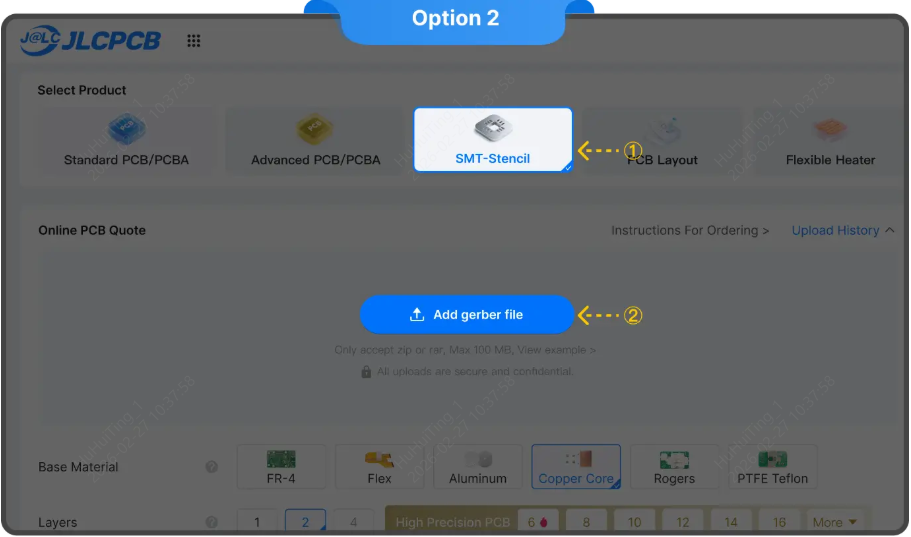
Already have your boards but need a new stencil? No problem. Head to our website, click "Instant Quote," and select "SMT Stencil" from the top menu. You can upload your Gerber files and customize your stencil (Electropolished, Nano-coated, Frameless, etc.) in seconds.
Option 3: The "Oops, I Forgot!" (From Order History)
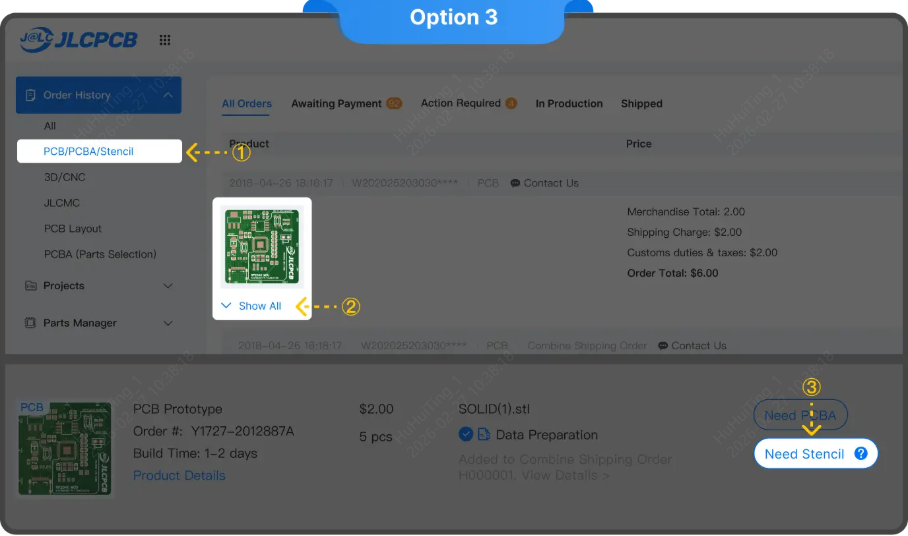
We've all been there—you ordered bare PCBs, and then realized hand-soldering those 0402s was a bad idea. Just go to your PCB Order History, find your previous order, click "Show all," and select "Need Stencil." We’ll generate a matching stencil for that exact board layout instantly.
🚀 Bring Your Designs to Life Faster & Better
At JLCPCB, we support your custom designs with the precision and convenience you need to succeed.
🎁 Click to Claim Your $11 Stencil Coupon Here! Experience the premium PCB stencil now!
✨ New User? Register now to unlock a $123 Coupon Bundle!
Precision assembly shouldn't break the bank. Whether you are finishing a complex high-density project or just starting a new prototype, we want to help you get professional-grade results for less!
For a limited time, we are giving away $11 Stencil Coupons to the community. This is your chance to experience the speed, precision, and convenience of JLCPCB stencils at an unbeatable price.
Click the link to grab your coupon and start your most efficient build yet.
🎁 Click to Claim Your $11 Stencil Coupon Here
⚠️ Important Details:
- Validity: Your $11 coupon is valid for 30 days after claiming.
- Don't Wait: The clock is ticking! Claim yours today and get your project moving faster and better.
Don't let your designs stay on the screen—turn them into reality today!